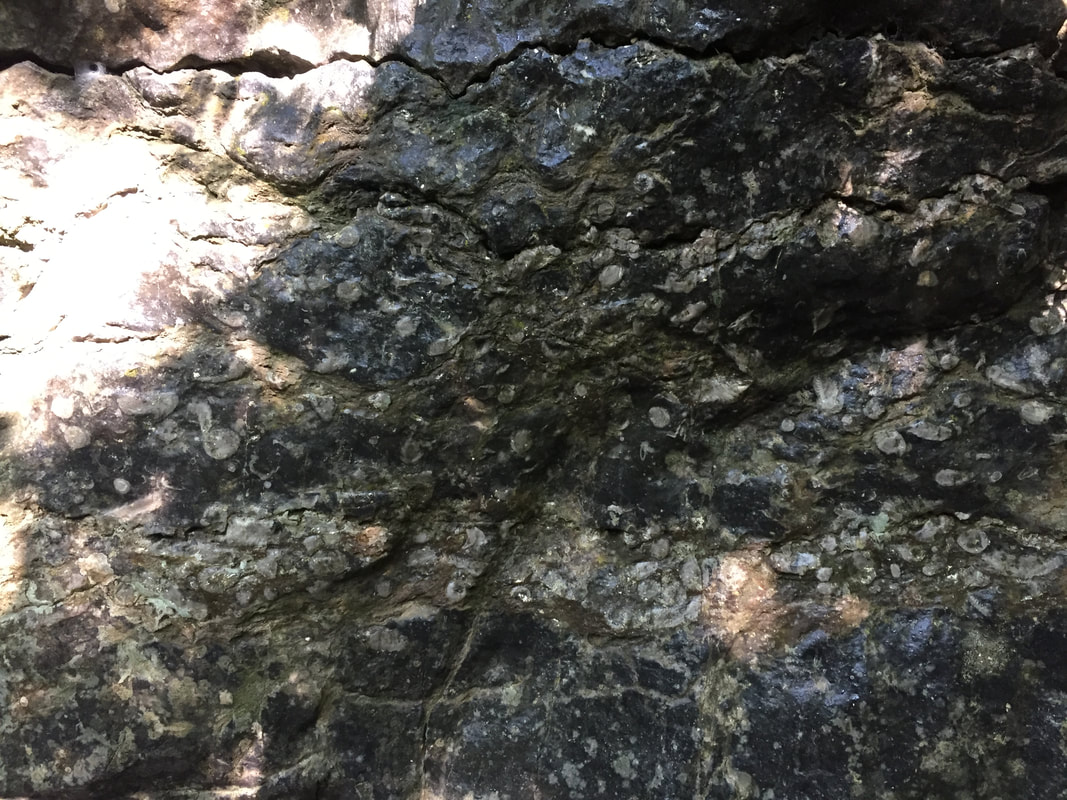
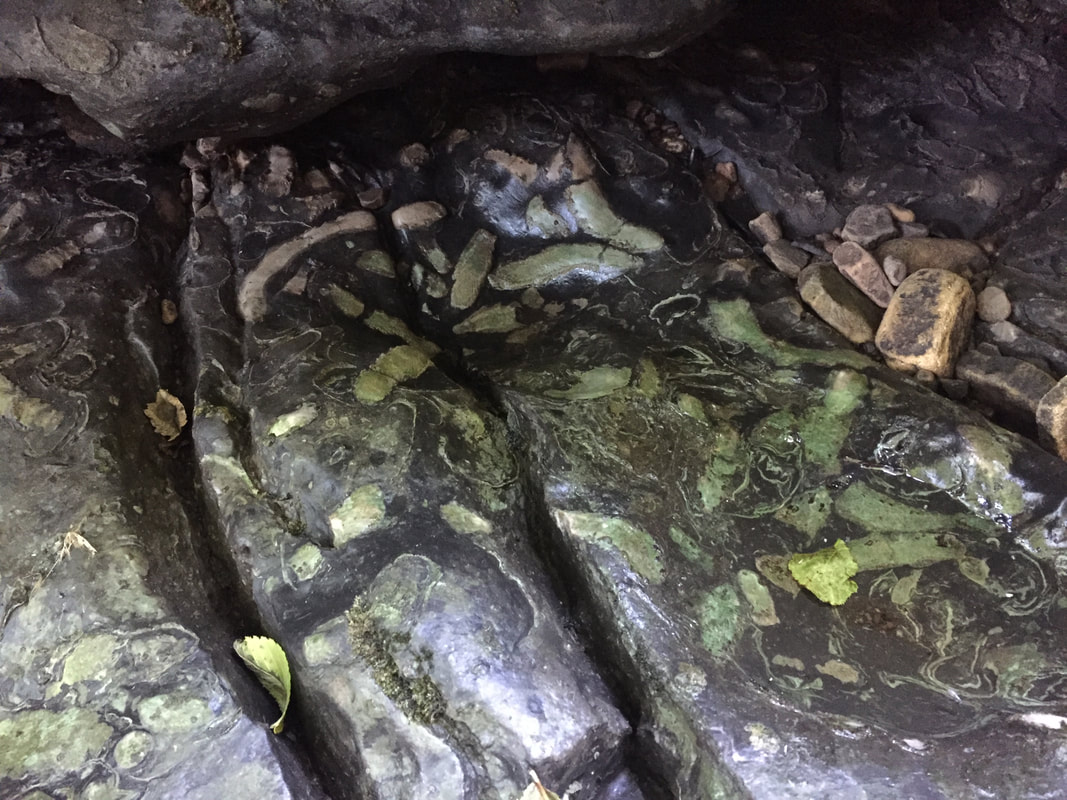
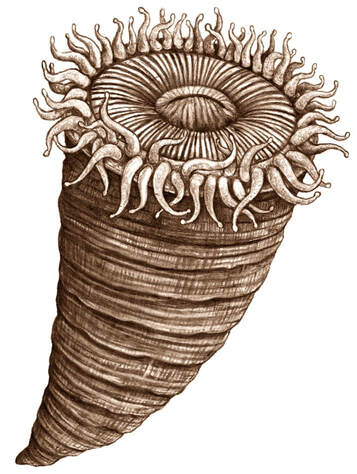
Fossils in t'Hills
  • Home
  • About us
  • Meet the team
  • Blogs
  • Events
  • Contact
  • Home
  • About us
  • Meet the team
  • Blogs
  • Events
  • Contact

Fossils in t'Hills blog

Unearthing the Frosterley Marble

7/23/2023

3 Comments

 
Picture
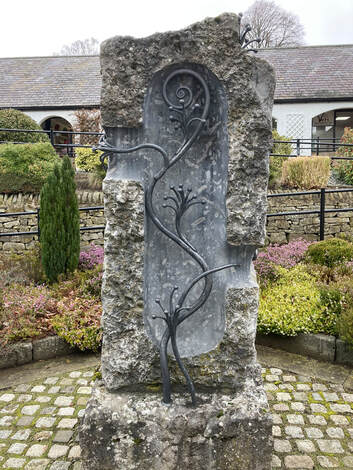
Sculpture made from Frosterley Marble, located at the Durham Dales Centre in Stanhope.
Dig deep into either the geology or architecture of north east England, and a name will keep cropping up: Frosterley Marble. This distinctive black stone, with its characteristic streaks of white, can be found in grand buildings across this part of the country, and far beyond.
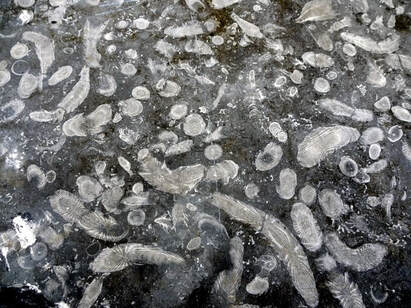
Despite its name, the Frosterley Marble isn’t actually a marble. It’s a limestone, a common type of sedimentary rock formed from the remains of countless tiny sea creatures that accumulated as oozy mud on an ancient seabed. The white markings within the rock are fossilised corals. True marbles are metamorphic rocks, formed by the alteration of regular limestones under intense heat and pressure within the Earth. These rocks are often much harder, and rarely contain fossils. The confusion in naming here dates back to the quarrymen who originally extracted and sold the stuff, who would name any particularly hard, decorative stone a marble.
And decorative it is! When cut and polished, the Frosterley Marble is stunningly beautiful. So much so that you can find it forming decorative pillars, fireplaces and statues in many public building across the north of England, including within the Chapel of the Nine Alters in Durham Cathedral, but it can also be found as far away as Mumbai!
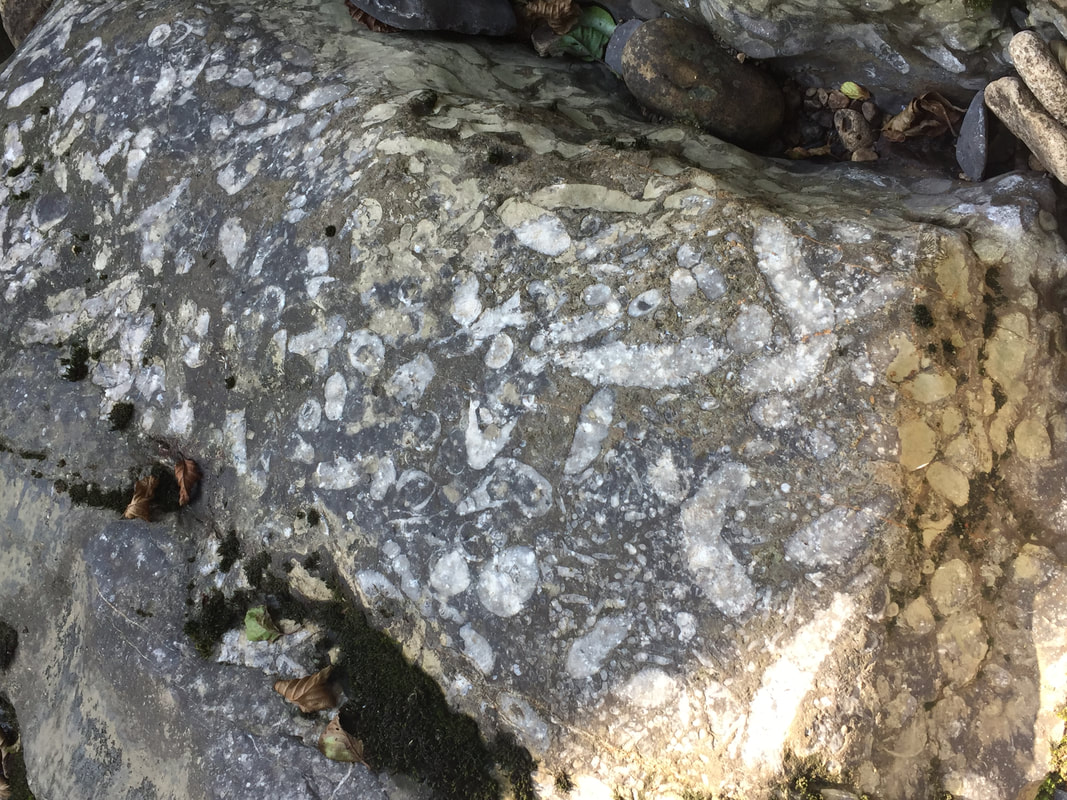
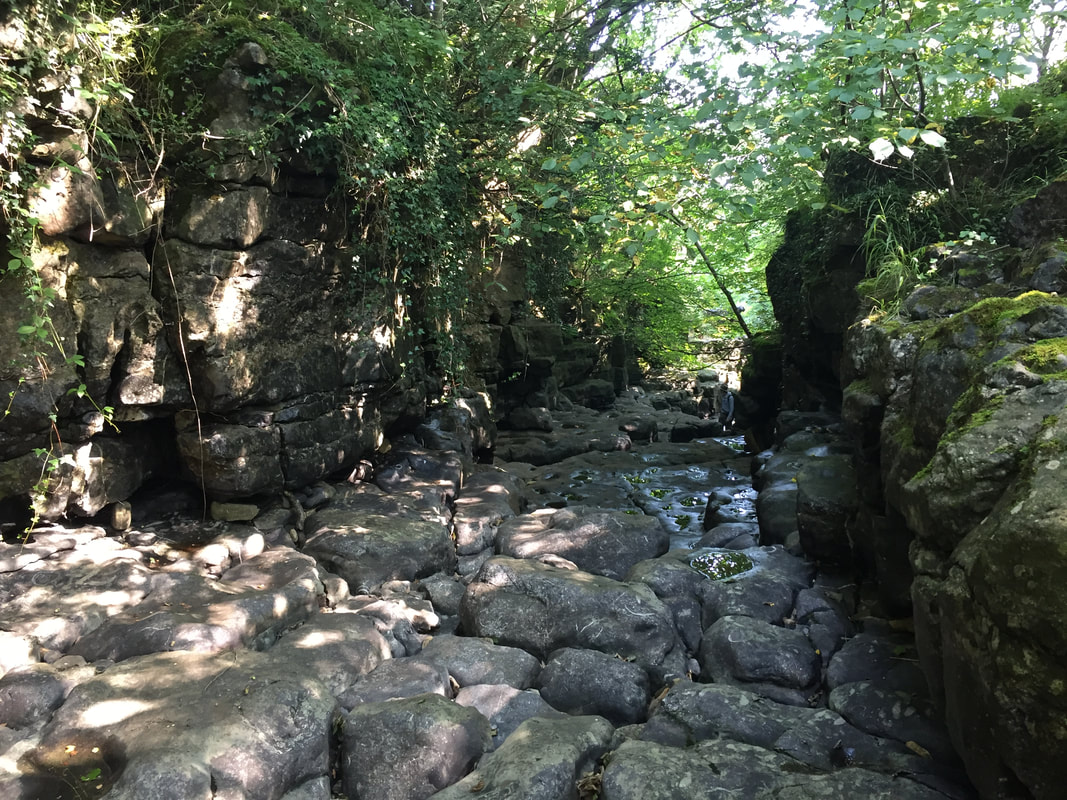
Yet despite the wide distribution of its use, it can only be found forming the bedrock in a single location, a number of small quarries in rural Weardale. The Frosterley Marble takes its name from the nearby village of Frosterley, where it has been quarried for centuries, with the first written mention of it dating back as far as 1183. There’s still plenty of the stuff left though, and it can be seen where the rocks outcrop in the stream bed of Bollihope Burn, in the woods just above the main quarry. Individual corals occasionally wash out, and can often be found further downstream.
Picture
White rugose corals preserved in a matrix of dark limestone - the Frosterley Marble is exceptionally beautiful when cut and polished! (image credit: Andrew Curtis, wikimedia commons)
It might at first glance seem a little odd that you can only find these fossils in a single place. After all, the Carboniferous rocks of the region are well known to form continuous layers across the landscape that stretch for many miles, creating the stepped hillsides so characteristic of the Yorkshire and Durham Dales. Many of these layers are so distinctive in their characteristics and thicknesses, that they have been given names by geologists, and by miners and quarrymen long before them.
The Frosterley Marble is part of an especially thick layer of rock called the Great Limestone (formed around 330 million years ago), which can be tracked across a large swathe of northern England. So why can’t these particular rocks, abundant in wonderful fossil corals, be found outcropping all across the Pennines? The answer lies in the nature of the environment in which they formed.
Those familiar with the geology of limestone, or indeed the geography and biology of modern reefs, will know that these ancient corals were born, lived and died in a tropical sea. For a decent chunk of the Carboniferous Period, much of what is now the UK was much closer the equator than it is today, and was under water. In these warm, shallow seas vast coral reefs thrived, which would later be preserved as the Frosterley Marble, and indeed, all the limestones of the region.
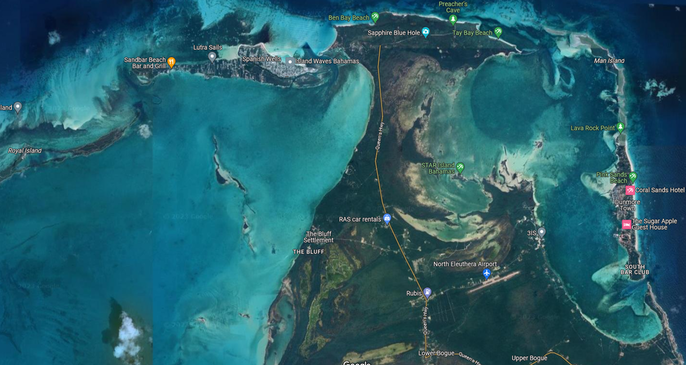
But reefs are complex, dynamic places. If you’ve ever been lucky enough to visit the Bahamas, or even just looked at that part of the world from space on Google Maps, you’ll see a patchwork of deeper water and small islands, with shallows between them. Many modern corals can only be found down to a certain depth (due to their reliance on the photosynthetic microbes they co-exist with), and so form thin bands around the margins of these islands where the water is just the right depth for them. Carboniferous England was no different. While limestone rock, formed mostly from microscopic sea creatures, was being laid down across a vast area, this particular coral reef likely existed only around the margin of an island. A thin band of the corals is all that was preserved, and we just happen to be lucky enough that the Bollihope Burn cuts through the rock in just the right spot to reveal them.
Picture
The Bahamas - a modern analogue for England's Carboniferous reefs (Google Maps)
Which brings us onto something else unusual about the Frosterley Marble: the corals themselves. The corals are of a species named Didunophyllum bipartitum, which is found in other layers of rock too. Often called solitary, horn or rugose corals, these are very different from many of the corals found in today’s seas. While almost all modern corals are colonial (meaning lots of individual organisms living together as part of a single structure) these corals were a singular creature. The last of these rugose corals disappeared at the end of the Permian, around 252 million years ago, but in these Carboniferous seas they were thriving.
In almost every other layer of rock they are found, rugose corals are accompanied by a wide array of other sea creatures, from elegant crinoids that swayed in the gentle currents, to shelly organisms like brachiopods and gastropods (sea snails). You won’t find any of these in the Frosterley Marble though. For the most part, this band of rock is monospecific (a word used by geologists to mean only one species is present, in this case Dibunophyllum). This was a reef entirely dominated by a single type of coral.
If you want to visit the Frosterley Marble for yourself, download this guided walk leaflet for a pleasant countryside stroll that takes you right past it:
https://www.thisisdurham.com/things-to-do/frosterley-marble-walk-p672871
Picture
A rugose or horn coral in life (image credit: Madison Perry)
Author: Jake Morton
3 Comments
David Curran
1/4/2025 11:49:03 am

Norwich Catholic Cathedral completed about 1903 as a parish church has many columns made 0f frosterly marble

Reply
Daniel Quall King
2/19/2025 12:08:07 am

Frosterly marble is also found in Durham Cathedral. Dent marble, from Dentdale, is no longer quarried, but is similar to the Frosterly, and the biome where it was formed was different. It contains crinoids, belemnites and other fossils. Further north in the Dales are occurances where the matrix is beige rather than black. See https://www.cumbria-industries.org.uk/a-z-of-industries/quarrying/the-dentdale-marble-industry/.

Reply
Paul Thornley
8/15/2025 11:11:45 am

Hi Jed/Becky
Yesterday I noted that The church notes at All Saints Kirkbymoorside claim that the 19th Century font in the church is made of Frosterley Marble.
They point out, quite correctly, that it is packed with crinoid fossils.
In fact it is entirely crinoidal and very fossiliferous with no coral at all.
I've heard that Frosterley can contain other fragments along with the corals, but never heard that it can be entirely crinoidal.
The font is darker than the usual derby fossil crinoidal stone you see in fireplaces and elsewhere, with almost a purple hue. But not as dark as the chapel in Helmsley church with its massive pieces of 19th Century coral Frosterley.
And it's nothing like Egglestone marble.
I don't think they are right about it being Frosterley. But happy to hear your thoughts

Reply


Leave a Reply.

    Archives

    January 2026
    February 2024
    August 2023
    July 2023
    June 2023
    April 2023
    March 2023
    January 2023
    December 2022
    November 2022
    October 2022
    September 2022

    Categories

    All
    Carboniferous
    Coal Measures
    Early Tetrapods
    Earthquakes
    Geology
    Huddersfield
    Millstone Grit
    North Pennines
    Pendle
    Shark
    Trace Fossils
    Wensleydale
    Yorkshire Dales

    RSS Feed

Powered by Create your own unique website with customizable templates.